Exhibition #2: Sights of Wonder

At a time where everyone is stuck at home, and museums are closed, the art scene changed a lot. Many institutions decided to use new techniques to keep on going: Art Basel went completely online, Christie’s and Sotheby’s developed their online bidding system, and several museums and galleries created virtual exhibitions.  When I first heard about the concept of virtual exhibition, I have to admit … Continue reading Exhibition #2: Sights of Wonder

Exposition #1: Picasso and Paper

Le 25 Janvier a ouvert l’exposition Picasso and Paper à la Royal Academy, qui décrit la longue relation que Pablo Picasso a eu avec le papier. Au départ, la feuille sert simplement de support à l’artiste pour ses œuvres, puis, au fil du temps le papier devient lui-même l’objet central de l’art de Picasso. On pourrait associer cette évolution aux changements du monde de l’art au XXème … Continue reading Exposition #1: Picasso and Paper

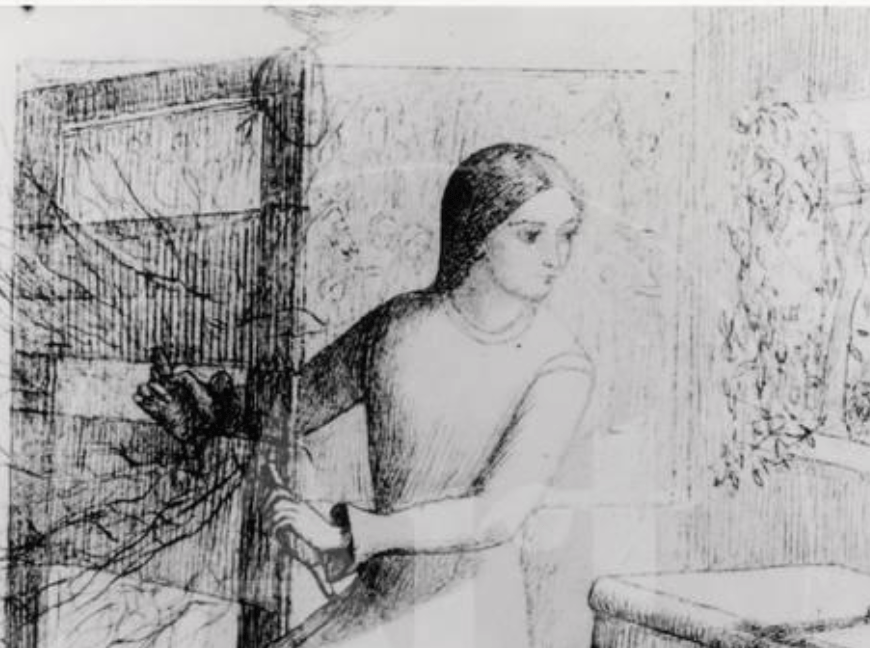
Illustration of “The Lady of Shalott” by Lizzie Siddal

She left the web, she left the loom She made three paces thro’ the room She saw the water-flower bloom, She saw the helmet and the plume, She look’d down to Camelot. Out flew the web and floated wide; The mirror crack’d from side to side; The poem “Lady of Shalott” (1832) by Alfred, Lord Tennyson (1808-1892) was a source of inspiration for several painters … Continue reading Illustration of “The Lady of Shalott” by Lizzie Siddal

Simonetta Vespucci, beauty icon of 15th century Florence

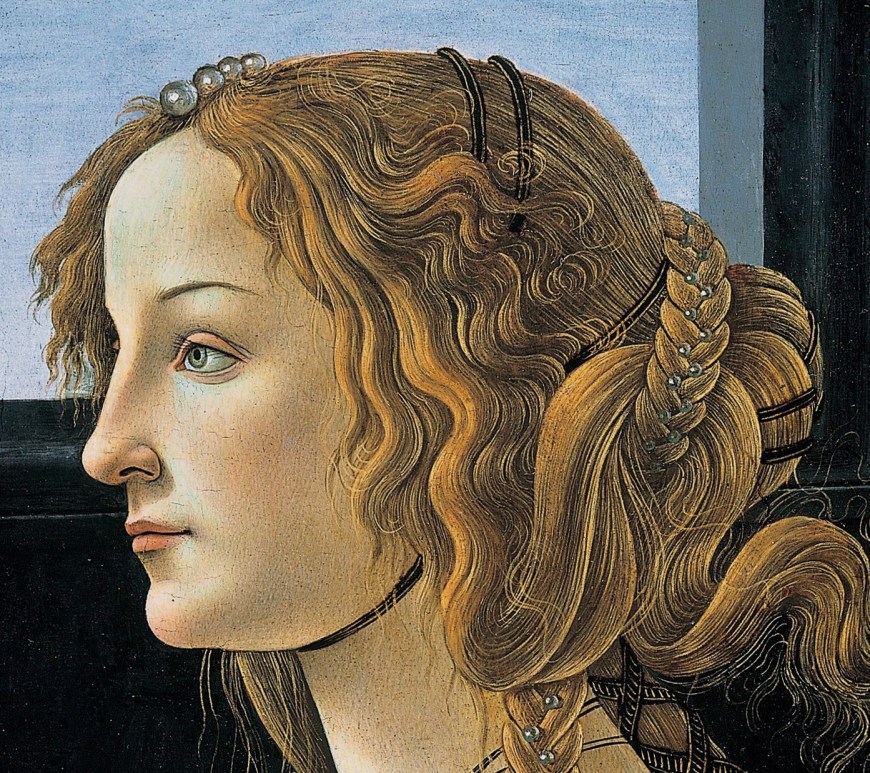
Simonetta Cattaneo was born I Genoa in 1453. In 1469, aged 16, she met Marco Vespucci, a distant cousin of the world-known cartographer Amerigo Vespucci. They married the same year which led Simonetta to move to Florence. There she found great success, particularly under the reign of Lorenzo de Medici (The Great). She was the admired by all artists and poets and loved by numerous … Continue reading Simonetta Vespucci, beauty icon of 15th century Florence

Cornelia Parker at the RA

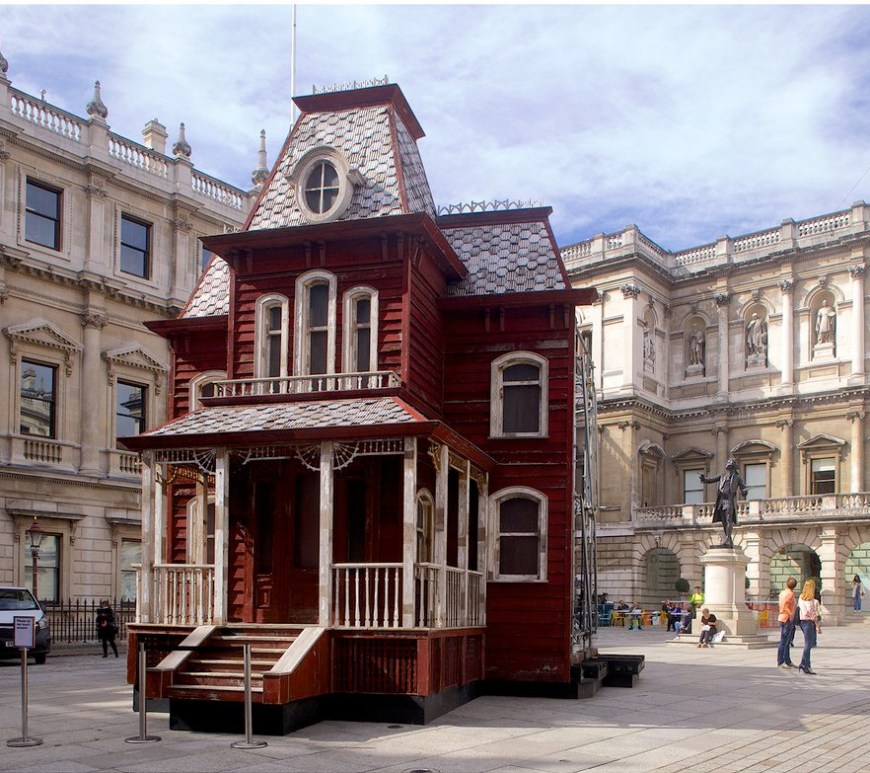
Cornelia Parker’s genius strikes again and this time, in the courtyard of the Burlington House at the Royal Academy of Arts in London. Her installation, Transitional Object (Psychobarn), is a façade held by scaffoldings, reproducing the house built for Hitchcock’s movie Psycho (1960). When entering the courtyard, the observer faces what seems to be an entirely built and finished house, from which emanates an inexplicable sense … Continue reading Cornelia Parker at the RA

Josef Albers et la modernité de l’art Zapotèque

Au cours de mon séjour vénitien, j’ai pu visiter l’exposition Josef Albers in Mexico, à la fondation Peggy Guggenheim. Cette exposition retrace les nombreux voyages du couple Albers en Amérique Latine, et l’impact que l’art primitif eût sur leurs travaux. En 1933, ce couple d’artistes professeurs de l’école du Bauhaus quitte l’Allemagne nazie pour s’installer en Caroline du Nord. C’est alors qu’ils commencent une série de … Continue reading Josef Albers et la modernité de l’art Zapotèque

Une découverte à Milan

  Il ne me reste que très peu de bons souvenirs de Milan. Parmi eux, la découverte d’une oeuvre dont je me souviendrai toute ma vie je l’espère, ou du moins, un certain temps. Un dimanche après-midi pluvieux, je me promène parmi les nombreuses affiches peintes par Toulouse-Lautrec, exposées au Palazzo Reale de Milan, toutes assez similaires, sans grande originalité, autour desquelles les commissaires d’expositions … Continue reading Une découverte à Milan

21, Rue la Boétie

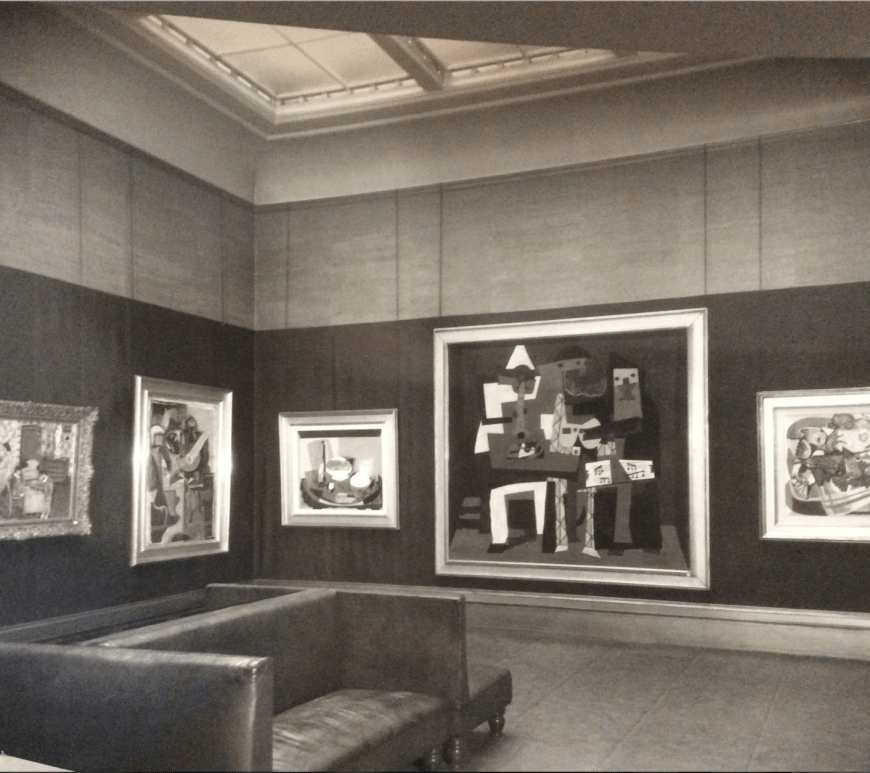
Lors de mon séjour parisien, poussée par la curiosité, et par l’enthousiasme de mes amis qui l’avaient vu, je me suis décidée à aller voir « 21 Rue La Boétie », m’attendant à deux ou trois salles, pleines de tableaux rangés par artistes, mouvements ou peut être par dates d’acquisition… Enfin, mes attentes n’étaient pas très élevées. Quelle ne fut pas ma surprise quand j’ai franchi la … Continue reading 21, Rue la Boétie

In what ways can science and technology directly affect art?

Art is not only the product of human talent, but also appears to be in some ways the product of scientific and technological innovations. According to the Oxford dictionary, “art is the expression or application of human creative skill and imagination, typically in a visual form such as painting or sculpture, producing works to be appreciated primarily for their beauty or emotional power.” Art can be … Continue reading In what ways can science and technology directly affect art?

“La Liberté guidant le peuple”, Eugène Delacroix, 1831.

En 1831, Eugène Delacroix peint La Liberté guidant le peuple, aujourd’hui tableau phare du romantisme, conservé au musée du Louvre. Il illustre la révolution française de 1830, trois jours d’émeutes dans les rues de Paris. Au centre se trouve une femme, la seule femme du tableau. Elle brandit de sa main gauche une baïonnette et de sa main droite, un drapeau bleu, blanc et rouge, … Continue reading “La Liberté guidant le peuple”, Eugène Delacroix, 1831.